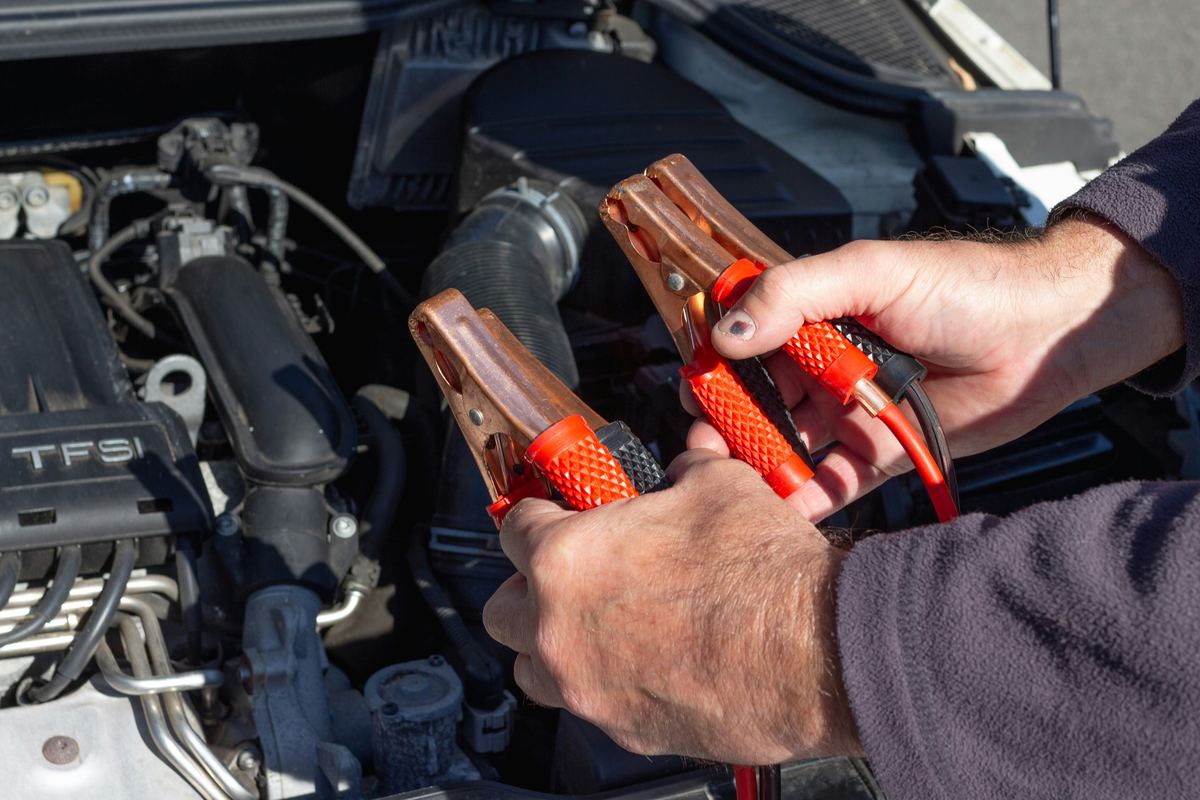
If your car won’t start but the lights work, the most common cause is a weak battery. Headlights and dashboard lights need very little power, but the starter motor needs a huge burst of current, so a battery can run the lights and still be too weak to start the engine. Other common causes are corroded battery terminals, a bad starter motor, a blown fuse or relay, a faulty ignition switch, or an anti-theft system problem.
The sound your car makes when you turn the key is the best clue. Let’s go through it.
What Sound Does Your Car Make?
- Rapid clicking: usually a weak battery or loose, corroded terminals.
- One loud click, then nothing: often a bad starter motor or solenoid.
- No sound at all: could be the ignition switch, a fuse or relay, the neutral safety switch, or the anti-theft system.
- Slow, labored cranking: a weak battery or poor connection.
- Normal cranking, but the engine won’t fire: a fuel or spark problem (see the section near the end).
7 Reasons Your Car Won’t Start but Lights Work
1. Weak or Dying Battery
This is the #1 cause. Most car batteries last about 3–5 years, and cold weather makes a weak battery even weaker.
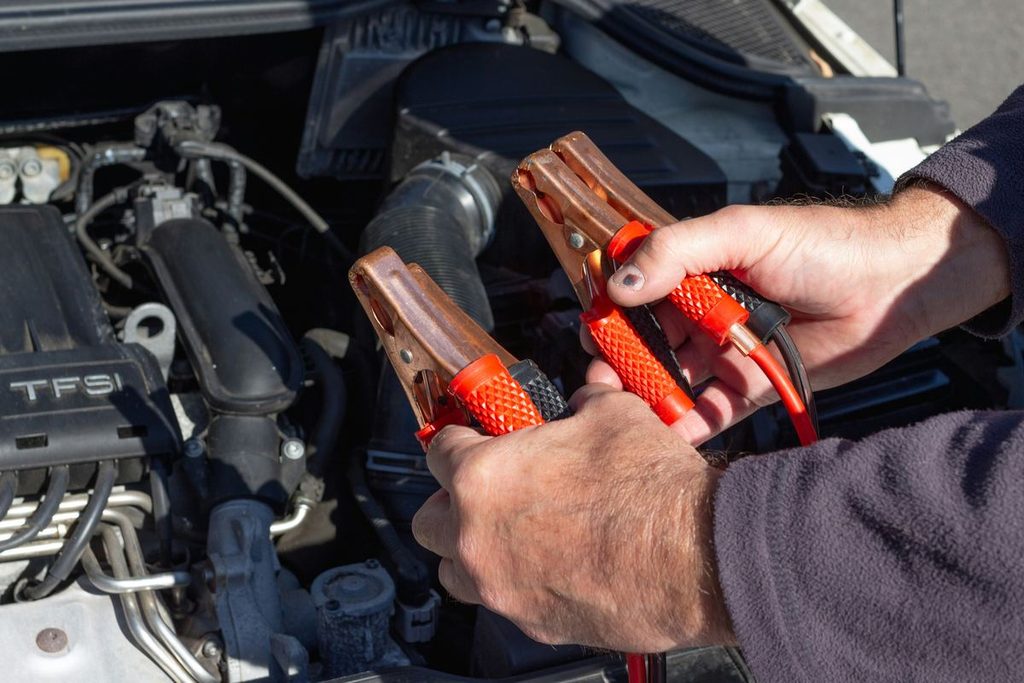
Signs: rapid clicking, slow cranking, or the dashboard lights dim sharply when you turn the key.
Test: with a multimeter, a healthy, fully charged battery reads about 12.6 volts. Around 12.2 volts or lower means it’s weak.
Fix: jump-start or charge the battery. If it keeps dying, replace it.
2. Corroded or Loose Battery Terminals
A white, blue, or green crust on the battery terminals blocks the high current the starter needs, even if there’s enough to run the lights.
Signs: visible corrosion, loose cables, or the car starts after you wiggle the terminals.
Fix: disconnect the negative cable first, then the positive. Clean both terminals with a baking soda and water mix and a wire brush, rinse, dry, and reconnect positive first. Tighten them firmly.
3. Bad Starter Motor or Solenoid
The starter spins the engine to get it running. When it fails, you often hear one click from the solenoid and nothing more.
Signs: a single click, or a grinding or whirring noise without the engine turning over.
Fix: replace the starter. Some people get a failing starter to work one more time by lightly tapping it with a tool while someone turns the key, but that’s only a temporary trick.
4. Blown Fuse or Bad Starter Relay
The starter circuit is protected by a fuse and controlled by a relay. If either fails, turning the key does nothing.
Signs: no click and no crank, but all lights and accessories work.
Fix: check the fuse box (the diagram is usually on the lid or in your owner’s manual). Replace any blown fuse with one of the same amperage. You can test the relay by swapping it with an identical one from the same box, like the horn relay.
5. Neutral Safety Switch or Clutch Switch
This switch prevents the car from starting in gear. If it fails or is misadjusted, the car won’t start in Park.
Signs: no response in Park, but it may start in Neutral.
Fix: for automatics, put your foot on the brake, shift to Neutral, and try again. For manuals, press the clutch pedal all the way down. If it starts in Neutral, have the switch checked.
6. Faulty Ignition Switch
The ignition switch sends power to different systems as you turn the key. A worn switch can power the lights and dashboard but fail to send the signal to the starter.
Signs: dash lights come on but nothing happens at “start”, or it works only when you wiggle the key.
Fix: a mechanic tests and replaces the ignition switch.
7. Key Fob Battery or Immobilizer Problem
Modern cars have an anti-theft immobilizer that stops the engine from starting if it doesn’t recognize your key.
Signs: a flashing security or key light on the dashboard, or a “key not detected” message.
Fix: try your spare key. If the fob battery is weak, many push-button cars let you start the car by holding the fob right against the start button; check your owner’s manual for your model’s method. Replace the fob battery (a few dollars) if needed.
If the Engine Cranks but Won’t Start
If the engine turns over normally but never fires, the battery and starter are probably fine. Common causes:
- Out of fuel: fuel gauges can fail, so don’t rule it out.
- Fuel pump: turn the key to ON (not start) and listen for a brief hum from the fuel tank. No hum may mean a bad pump, fuse, or relay.
- Spark problems: worn spark plugs or a faulty ignition coil.
- Sensor failure: a bad crankshaft position sensor can stop the engine from starting, often with a check engine light.
DIY Checks You Can Do
- Listen to the sound when you turn the key, using the list above.
- Headlight test: turn on the headlights and try to start. If they dim heavily, the battery or connections are the problem.
- Inspect the terminals for corrosion or loose cables.
- Measure battery voltage with a multimeter.
- Try Neutral (automatic) or press the clutch fully (manual).
- Try the spare key.
- Jump-start the car. If it starts right away, the battery or charging system is the likely cause.
Safety: batteries give off flammable gas. Keep sparks and flames away, never jump-start a cracked or frozen battery, and follow the jump-start order in your owner’s manual.
Typical Repair Costs
Rough US estimates; prices vary by vehicle and location:
- Key fob battery: about $5–$10
- Fuse: about $5–$20 (DIY)
- Cleaning battery terminals: free (DIY) to about $50
- Starter relay: about $20–$100
- New battery, installed: about $150–$300 (AGM batteries cost more)
- Neutral safety switch: about $150–$400
- Ignition switch: about $150–$500
- Starter motor replacement: about $300–$800
How to Prevent It
- Test your battery once a year after it’s 3 years old. Many auto parts stores do it for free.
- Keep the terminals clean and tight.
- If your car sits for long periods, use a battery maintainer.
- Keep a portable jump starter in your car so a weak battery never strands you.
FAQ
Can a car battery be too weak to start the car even if the lights work?
Yes. Lights use very little power, while the starter needs hundreds of amps. A battery can easily run the lights but fail to crank the engine.
How do I know if it’s the battery or the starter?
Try a jump-start. If the car starts right away, it’s likely the battery. If you still hear a single click with a good jump, the starter is the more likely problem.
Can a bad alternator cause a car not to start?
Indirectly, yes. A failing alternator doesn’t recharge the battery, so the battery keeps going flat. With the engine running, a healthy charging system usually shows about 13.7–14.7 volts at the battery.
Why does my car click but not start?
Rapid clicking almost always means the battery can’t deliver enough current. A single click usually points to the starter or a poor connection.
Safety note: Car batteries and electrical systems can cause injury. If you’re unsure, have a certified mechanic diagnose the problem.
3 thoughts on “Car Won’t Start but Lights Work? 7 Causes and How to Fix It”