
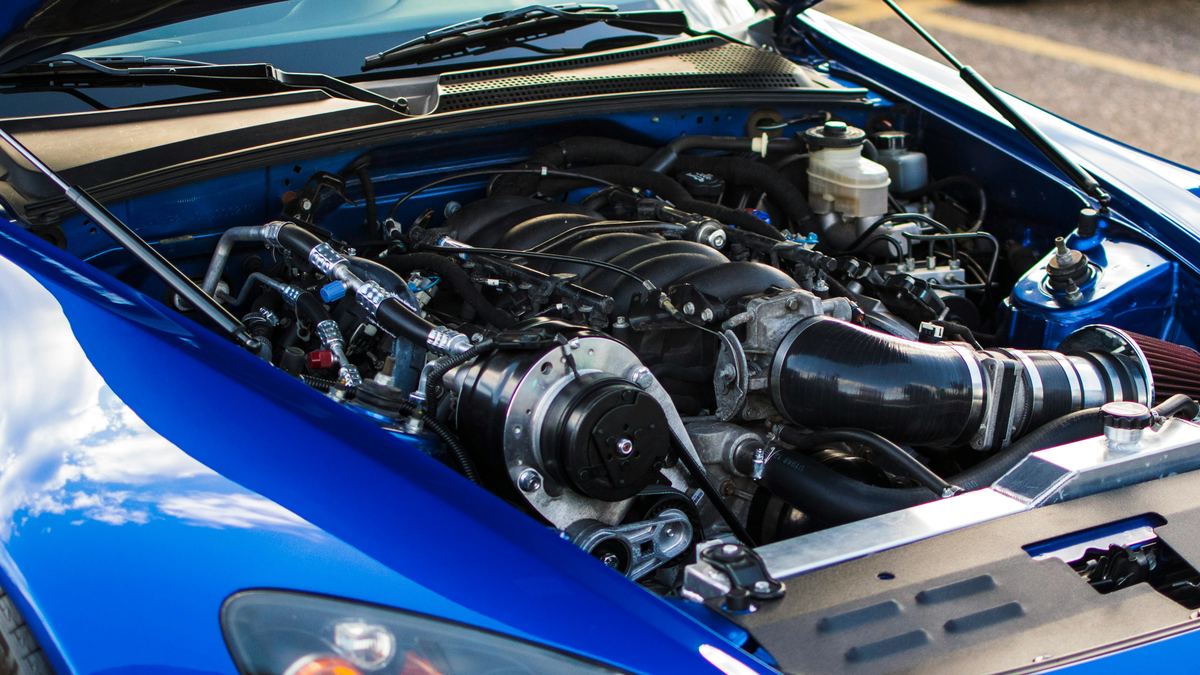
If your car shakes when idling, the most common causes are worn spark plugs, a failing ignition coil, or worn motor mounts. Other causes include a vacuum leak, dirty fuel injectors, a dirty throttle body, or a faulty airflow sensor. A little vibration at idle is normal, but noticeable shaking isn’t.
The best clue is when it shakes, and whether the check engine light is on.
What the Pattern Tells You
- Shakes in Drive at a stop, but smooth in Park or Neutral: often worn motor mounts.
- Shakes in Park and Drive, with a check engine light: likely a misfire (spark plugs, coils, or injectors).
- Rough idle with a hissing sound: likely a vacuum leak.
- Idle speed jumps up and down or the engine nearly stalls: often a dirty throttle body or idle control problem.
- Shakes more with the AC on: the extra load exposes weak motor mounts or an idle control problem.
- Shakes while driving at speed, not at idle: a different problem; see steering wheel shakes at high speed.
7 Reasons Your Car Shakes When Idling
1. Worn or Fouled Spark Plugs
Worn spark plugs can’t fire consistently, so one cylinder skips beats. That uneven firing is easiest to feel at idle.
Signs: rough idle, hesitation, worse fuel economy, sometimes a check engine light.
Fix: replace the spark plugs at the interval in your owner’s manual.
2. Failing Ignition Coil
A weak coil causes a misfire in one cylinder. If the check engine light is flashing, it’s a severe misfire; see check engine light flashing.
Fix: read the codes (P0301–P0308 point to a specific cylinder) and replace the faulty coil.
3. Worn Motor Mounts
Motor mounts are rubber blocks that hold the engine and absorb its vibration. When they wear out or crack, you feel the engine’s normal vibration through the whole car.
Signs: shaking mainly in Drive at a stop, a clunk when shifting into Drive or Reverse, or the engine visibly rocking.
Fix: replace the worn mount or mounts.
4. Vacuum Leak
A cracked hose or leaking gasket lets unmeasured air into the engine, upsetting the air-fuel mix at idle.
Signs: a hissing sound, high or unstable idle, lean codes like P0171 or P0174.
Fix: find and replace the leaking hose or gasket. A shop smoke test finds leaks quickly.
5. Dirty or Clogged Fuel Injectors
If an injector is clogged, that cylinder gets too little fuel and runs rough.
Signs: rough idle, hesitation, a misfire in one cylinder that doesn’t move when you swap coils.
Fix: a fuel system cleaning may help; otherwise replace the injector.
6. Dirty Throttle Body or Idle Control Valve
Carbon buildup in the throttle body can restrict the small amount of air the engine needs at idle. Older cars also have an idle air control valve that can stick.
Signs: low or surging idle, stalling when coming to a stop.
Fix: clean the throttle body with throttle body cleaner, or replace the idle control valve.
7. Dirty or Faulty Mass Airflow (MAF) Sensor
The MAF sensor measures how much air enters the engine. If it’s dirty or failing, the engine gets the wrong amount of fuel.
Signs: rough idle, hesitation, poor fuel economy, sometimes code P0101.
Fix: clean it with MAF sensor cleaner (never touch the sensor wires), or replace it.
DIY Checks You Can Do
- Read the codes with an OBD2 scanner, or at an auto parts store.
- Motor mount test: with your foot firmly on the brake, have someone watch the engine while you shift between Drive and Reverse. Excessive rocking or clunking points to worn mounts.
- Listen for hissing around the engine at idle.
- Check when it shakes: Park vs. Drive, AC on vs. off.
- Check your spark plug service history. If they’re overdue, start there.
Is It Safe to Drive?
Usually, for short trips, yes, as long as the check engine light isn’t flashing. A flashing light, stalling, or strong fuel smell means you should stop and get it checked. See car smells like gas if you notice fuel odors.
Typical Repair Costs
Rough US estimates; prices vary by vehicle and location:
- Throttle body cleaning: about $10 (DIY) to $150
- MAF sensor cleaning: about $10 (DIY); replacement about $150–$400
- Vacuum leak repair: about $100–$300
- Spark plugs: about $100–$300
- Ignition coil: about $100–$300 each
- Motor mount: about $200–$600 each
- Fuel injector: about $300–$900
FAQ
Why does my car shake at idle but smooth out when I drive?
At idle, the engine runs slowly, so misfires and weak mounts are easier to feel. At higher RPM, the vibrations blend together.
Why does my car shake at a stop light in Drive but not in Park?
In Drive, the engine is under load against the transmission, which puts more stress on the motor mounts. Worn mounts are the most likely cause.
Can a bad battery cause a rough idle?
Rarely. A weak charging system can cause some odd electrical behavior, but rough idle is usually a spark, air, fuel, or mount problem.
Is a little vibration at idle normal?
A slight vibration is normal, especially in small engines and with the AC on. Noticeable shaking, or a change from how the car normally feels, is not.
Safety note: If your check engine light is flashing or the engine stalls, stop driving and have your car inspected by a certified mechanic.