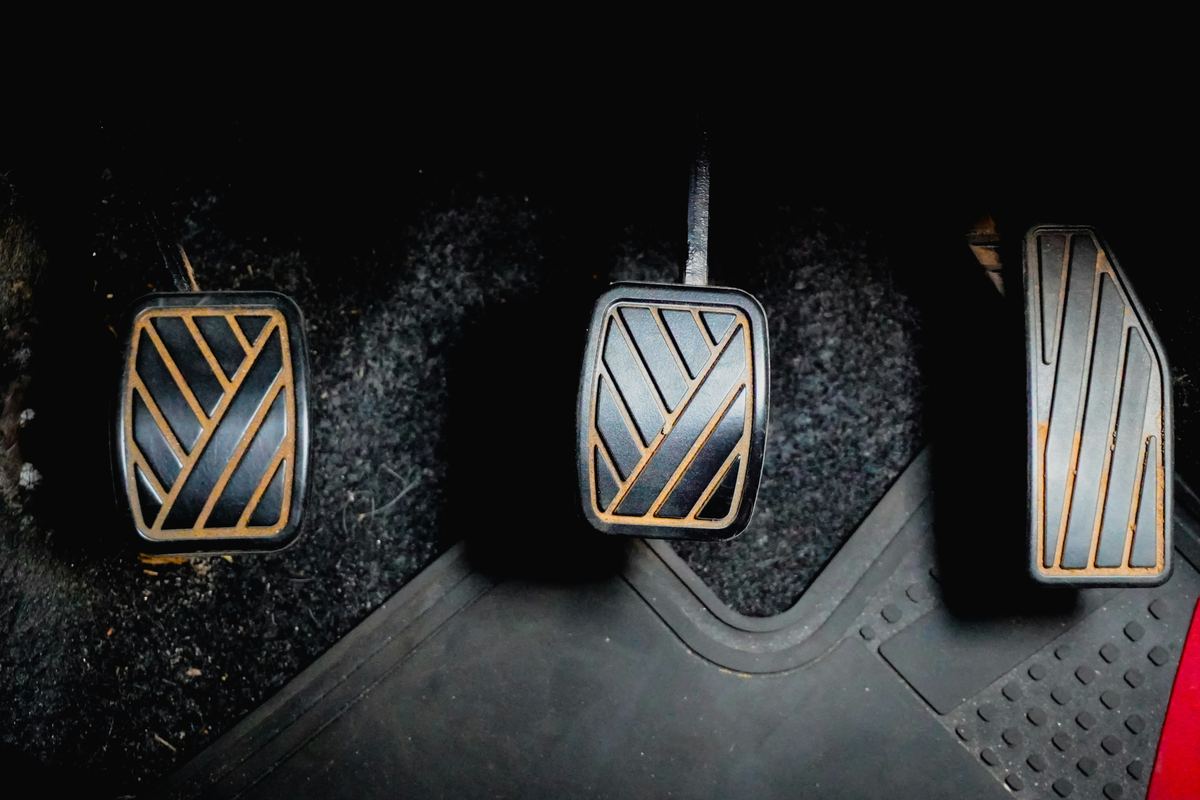
If your brake pedal goes to the floor, the most common causes are low brake fluid from a leak, air in the brake lines, or a failing master cylinder. Less often, it’s caused by overheated brake fluid, badly worn brakes, or an ABS unit problem.
This is a serious safety problem. If your pedal sinks to the floor, don’t keep driving the car. Have it towed to a shop.
⚠️ If Your Brakes Fail While Driving
- Stay calm and pump the brake pedal quickly and firmly. This can sometimes build enough pressure to slow the car.
- Shift to a lower gear to use engine braking. In an automatic, move to a lower gear or “L” if available.
- Apply the parking brake gradually. Pull the lever or press the pedal slowly and steadily, not all at once, to avoid skidding. Many electronic parking brakes act as an emergency brake if you hold the switch; check your owner’s manual.
- Turn on your hazard lights, use your horn, and steer toward a safe area.
- Don’t turn off the engine until you’ve stopped, because you’d lose power steering.
What Does Your Brake Pedal Feel Like?
- Suddenly goes to the floor, with a brake warning light: likely a fluid leak.
- Soft and spongy, but firms up when you pump it: likely air in the brake lines.
- Slowly sinks while you hold steady pressure at a stop: likely a failing master cylinder.
- Goes soft only after long downhill braking: likely overheated (boiling) brake fluid.
- Hard to push, not sinking: a different problem, usually the brake booster.
6 Reasons Your Brake Pedal Goes to the Floor
1. Brake Fluid Leak
Your brakes work by pushing fluid through lines to each wheel. A leak lets fluid escape, so the pedal loses pressure.
Where leaks happen: brake lines (often from rust), rubber brake hoses, calipers, or rear wheel cylinders.
Signs: the brake warning light is on, the fluid level is low, wet spots near a wheel, or a clear-to-brown slippery fluid under the car.
Fix: find and repair the leak, then refill and bleed the brakes.
2. Air in the Brake Lines
Brake fluid can’t be compressed, but air can. If air gets into the system, pressing the pedal squeezes the air instead of applying the brakes.
Signs: a soft, spongy pedal, especially right after brake work or after the fluid ran low.
Fix: bleed the brakes to remove the air, and find out how the air got in.
3. Failing Master Cylinder
The master cylinder turns your foot pressure into hydraulic pressure. When its internal seals wear out, fluid slips past them inside the cylinder. That means there’s no visible leak.
Signs: the pedal slowly sinks toward the floor while you hold it at a stop, even though the fluid level looks fine.
Fix: replace the master cylinder, then bleed the brakes.
4. Overheated (Boiling) Brake Fluid
Brake fluid slowly absorbs moisture over time, which lowers its boiling point. During long downhill braking, old fluid can boil and form vapor bubbles, making the pedal sink. This is called brake fade.
Signs: the pedal goes soft after heavy braking, then may return once the brakes cool. You may also notice a hot brake smell; see our guide to burning smells after driving.
Fix: let the brakes cool completely, then have the fluid flushed and replaced.
5. Badly Worn Brakes or Out-of-Adjustment Drums
Very worn pads, or rear drum brakes that need adjusting, mean the pedal has to travel much farther before the brakes engage.
Signs: a low pedal, grinding noises, longer stopping distances.
Fix: replace the pads or shoes and adjust the drums. For other warning signs of worn brakes, see why a car shakes when braking at high speed.
6. ABS Unit Problem
Less commonly, a fault in the anti-lock brake (ABS) hydraulic unit can cause a soft or sinking pedal, or trap air that’s hard to bleed out.
Signs: the ABS warning light is on, along with pedal problems.
Fix: a shop diagnoses the ABS system with a scan tool; the unit may need special bleeding or replacement.
DIY Checks (With the Car Parked)
- Check the brake fluid reservoir under the hood. If the level is below MIN, there’s likely a leak or very worn pads.
- Look for leaks at each wheel and along the brake lines under the car.
- Pedal test: with the engine running, press the pedal and hold steady pressure for about 30 seconds. If it slowly sinks, suspect the master cylinder.
- Check the fluid color: fresh brake fluid is clear to light amber; dark brown fluid is old and needs replacing.
- Check the dashboard for the brake or ABS warning light.
Important: only top up with the fluid type printed on the reservoir cap (such as DOT 3 or DOT 4), and keep it off your paint, since brake fluid damages it. Topping up doesn’t fix a leak; the car still needs to be inspected before driving.
Is It Safe to Drive?
No. A brake pedal that goes to the floor means your brakes may not stop the car. Even if it “still stops,” the problem can get worse without warning. Have the car towed.
It’s also worth checking for open safety recalls on your vehicle at NHTSA.gov/recalls.
Typical Repair Costs
Rough US estimates; prices vary by vehicle and location:
- Brake bleeding: about $75–$150
- Brake fluid flush: about $100–$200
- Brake hose: about $150–$300
- Brake line repair: about $150–$600+
- Caliper (each): about $250–$500
- Master cylinder: about $300–$700
- ABS unit: about $500–$2,000+
How to Prevent It
- Change your brake fluid on the schedule in your owner’s manual, often every 2–3 years.
- Have the brake lines and hoses inspected at every brake service, especially in areas where roads are salted.
- On long downhill drives, use a lower gear instead of riding the brakes.
FAQ
Can low brake fluid make the pedal go to the floor?
Yes. Low fluid, usually from a leak, is one of the most common causes. It’s often accompanied by a brake warning light.
Is it normal for the brake pedal to drop when I start the car?
Yes, a small drop is normal. When the engine starts, the brake booster adds power assist, so the pedal moves slightly lower under your foot. It shouldn’t keep sinking.
Can air in the brake lines go away by itself?
No. Air stays in the system until the brakes are bled.
Can I drive if the brake pedal goes to the floor but the car still stops?
No. The problem can suddenly get worse. Have the car towed and inspected.
Safety note: Brakes are critical safety equipment. If you have any doubt about your brakes, don’t drive the car. Have it inspected by a certified mechanic.