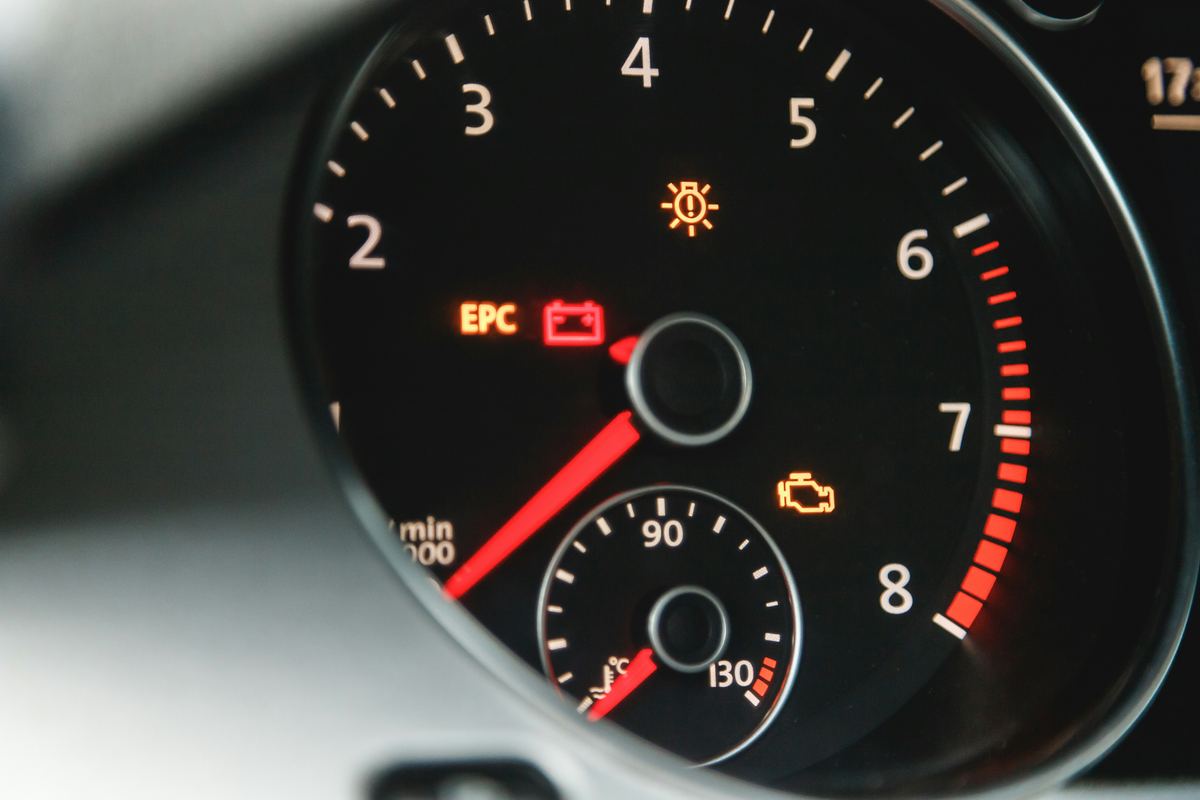
If the battery light comes on while driving, it usually means your car’s charging system isn’t working, not necessarily that the battery is bad. The most common causes are a failing alternator, a broken or slipping serpentine belt, or loose or corroded battery connections.
When the charging system stops working, your car runs on battery power alone, and the battery can go flat surprisingly quickly. Here’s what to do and how to find the cause.
What to Do Right Away
- Turn off anything you don’t need: AC or heater fan, heated seats, radio, and phone chargers. Keep headlights on if it’s dark or raining.
- Check the temperature gauge and steering. If the engine is overheating or the steering suddenly feels heavy, the serpentine belt has probably broken. Pull over safely and turn off the engine.
- Drive straight to a shop or a safe place. How long the battery lasts varies a lot, often less than an hour and sometimes much less.
- Avoid turning the engine off until you arrive, since it may not restart.
Note: it’s normal for the battery light to come on for a moment when you start the car. That’s just a bulb check.
Why Is the Battery Light On While Driving? 6 Causes
1. Failing Alternator (Most Common)
The alternator charges the battery and powers the electrical system while the engine runs. When it fails, the battery slowly drains.
Signs: dimming or flickering lights, electrical features acting strangely, a whining noise from the engine.
Fix: replace the alternator.
2. Broken or Slipping Serpentine Belt
The serpentine belt spins the alternator. If it slips, the alternator can’t charge properly; if it breaks, charging stops completely.
Signs: a squealing noise, especially when accelerating; if the belt breaks, heavy steering and rising engine temperature. See our guide to squealing noises when accelerating.
Fix: replace the belt, and the tensioner if it’s weak.
3. Loose or Corroded Battery Connections
A loose cable or corroded terminal blocks the flow of current, so the battery may not charge even if the alternator is fine.
Signs: white or green crust on the terminals, the light flickering over bumps.
Fix: clean and tighten the terminals. See the step-by-step instructions in our guide on what to do when your car won’t start but the lights work.
4. Bad Wiring, Ground, or Fuse
A damaged wire, a loose ground connection, or a blown fuse in the charging circuit can stop the alternator from charging the battery.
Signs: the alternator tests fine, but the battery still isn’t charging.
Fix: a mechanic tests the circuit and repairs the wiring, ground, or fuse.
5. Faulty Voltage Regulator
The voltage regulator (usually built into the alternator) keeps the charging voltage in a safe range. When it fails, it can undercharge or overcharge the battery.
Signs: lights that get unusually bright, a swollen battery, or a rotten-egg smell from an overcharged battery (see our guide to burning smells after driving).
Fix: replace the regulator, which often means replacing the alternator.
6. Worn-Out Battery
Less commonly, an old or failing battery can’t accept a charge properly, and some cars will show the warning light.
Signs: the battery is 3–5+ years old, slow cranking, or the car won’t start after sitting.
Fix: test and replace the battery if needed.
How to Test the Charging System
A basic multimeter tells you a lot:
- Engine off: a healthy, fully charged battery reads about 12.6 volts.
- Engine running: a working charging system usually reads about 13.7–14.7 volts.
- Running reading close to 12 volts or lower: the alternator likely isn’t charging.
- Running reading well above 15 volts: possible overcharging from a bad regulator.
Many auto parts stores will also test your battery and charging system for free.
Is It Safe to Drive?
For a short distance, usually yes, but only to get the car checked. Once the battery runs flat, the engine can stall, and you’ll lose power to the lights and other systems. If the belt has broken, stop driving to avoid overheating the engine.
Typical Repair Costs
Rough US estimates; prices vary by vehicle and location:
- Battery and charging system test: often free at auto parts stores
- Cleaning or replacing battery terminals and cables: about $50–$200
- Serpentine belt: about $100–$250
- New battery, installed: about $150–$300
- Voltage regulator (if separate): about $150–$400
- Alternator: about $400–$900
FAQ
Can I drive with the battery light on?
Only for a short distance to get help. Your car is running on battery power alone, and it can stall once the battery is drained.
How long can a car run with the battery light on?
It depends on the battery’s condition and how much electrical power you’re using. It can be less than an hour, and sometimes only minutes. Turn off unneeded accessories to stretch it.
Does the battery light mean I need a new battery?
Not usually. It most often points to the alternator, belt, or connections. Have the whole charging system tested before buying a battery.
Why does my battery light come on and then go off?
Often a loose connection, a slipping belt, or an alternator that’s starting to fail. It’s an early warning, so get it checked before it becomes permanent.
Safety note: If your battery light comes on along with overheating or heavy steering, pull over safely and turn off the engine. When in doubt, have a certified mechanic inspect your charging system.